
Russian Grey Shrike OK with you?
What’s in a name
Sorry. Was supposed to post last week and just got swamped! Went to do something on Redpolls, to find Rebecca beat me too it and did a much better job! Multi-authored blogs eh?
Anyway, back now. Last friday 5th November I went to see a Great Grey Shrike, only about 15 minutes drive from my house in Sheffield, UK. Got some good views and first impressions were a bit disconcerting. Not a typical 1st winter Great Grey Shrike of the kind I was expecting.
Below the title and the photo below show what they usuually look like. This bird also near my home in early spring 2009.
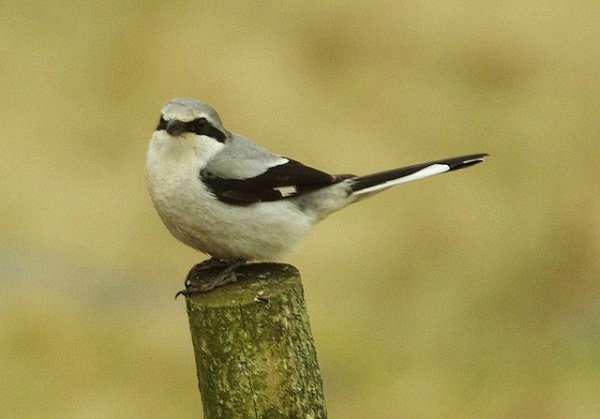 Great Grey Shrike. A first winter (or 2nd calendar year). nr Sheffield, UK. March 2009. As expected this appears to be of the nominate from which occurs in NW Eurasia. This is the only form which has so far occurred in the U.K. The worn brown primaries and fade pale tips to some greater coverts suggest it s first winter, though not always easy to age. These have been annual in very small numbers on the Pennine fringe near Sheffield in recent winters.
So you can see why going to see a Great Grey Shrike on the Pennine fringe, near Sheffield last week wasn’t supposed to throw up any surprises…
Enter this bird:
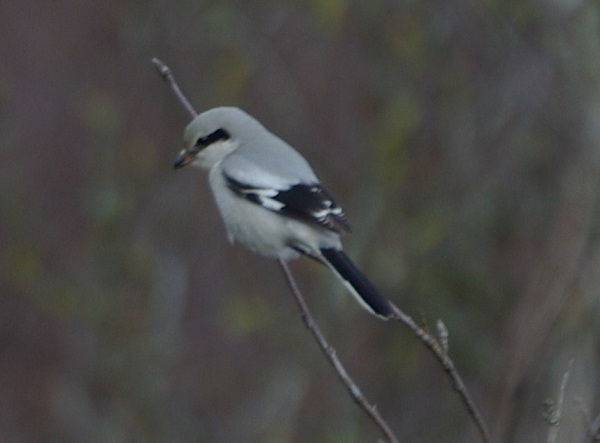
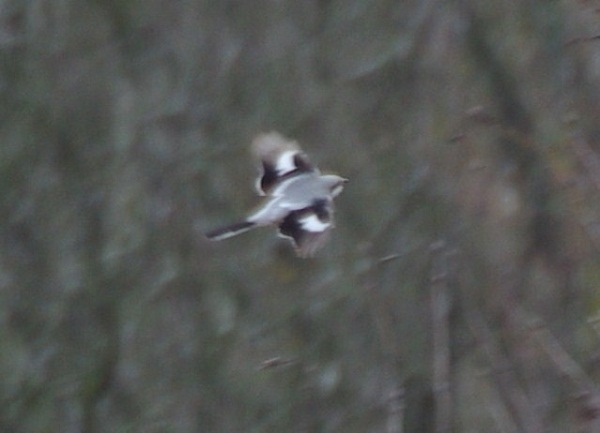
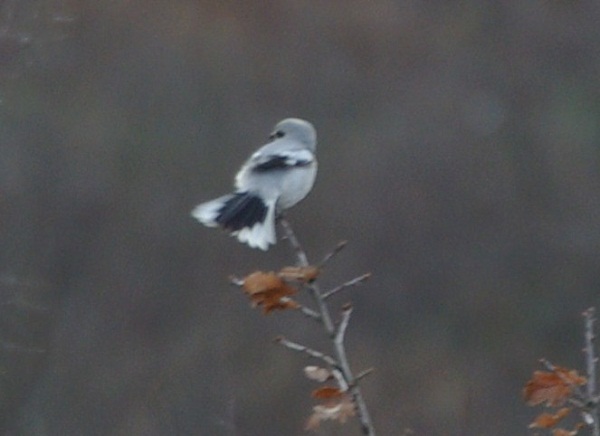
Compared to the usual Great Grey Shrikes that winter in the UK, this one looked a bit paler above, had much more white at the base of the secondaries, much more white in its distinctive tail pattern and a bit of an unusual looking face pattern. All the characters point towards a different taxon. A different ‘race’ of Great Grey Shrike. The race its most resembles is ‘homeyeri’ which occurs to the south and east of the nominate form. It seems to occur on passage in places like Kazakhstan. The race has occurred 6 times in Sweden, 3 times an Finland and possibly once or twice elsewhere in Western Europe.
Now try and say ‘HOMEYERI‘. I think I would prefer to refer to this taxon by an English name! It doesn’t seem to have ever been given one.
What are the rules for ‘new’ bird names in 2010? What to call then? Some hastily thought-up suggestions for the complex:
Great Grey Shrike – nominate excubitor
Russian Grey Shrike – ssp homeyeri (There must be a more appropriate name than this)
eerr dunno – ssp. leucopterus (considered by some to be a synonym of homeyeri)
Siberian Grey Shrike ssp sibericus
Northern (Grey) Shrike ssp. borealis (thats the one in North America- or are there 2 North American subspecies?)
Thorn Magpie – I like it – describes behaviour and plumage in 2 words! It’s the translation from the Swedish for Great Grey Shrike- so Great Thorn Magpie, Russian Thorn Magpie, Siberian Thorn Magpie, etc etc
My one little observation in Sheffield makes me start to think outside the box. What other forms of these grey shrikes could occur as vagrants and are maybe overlooked?. The North American borealis must be a potential vagrant to Western Europe – and what about sibericus reaching North America? Lots to learn and be discovered still!
Thoughts welcome…
I have always rather liked the Old English name Wurchangel. Maybe we should revive this long-dead name.
🙂